
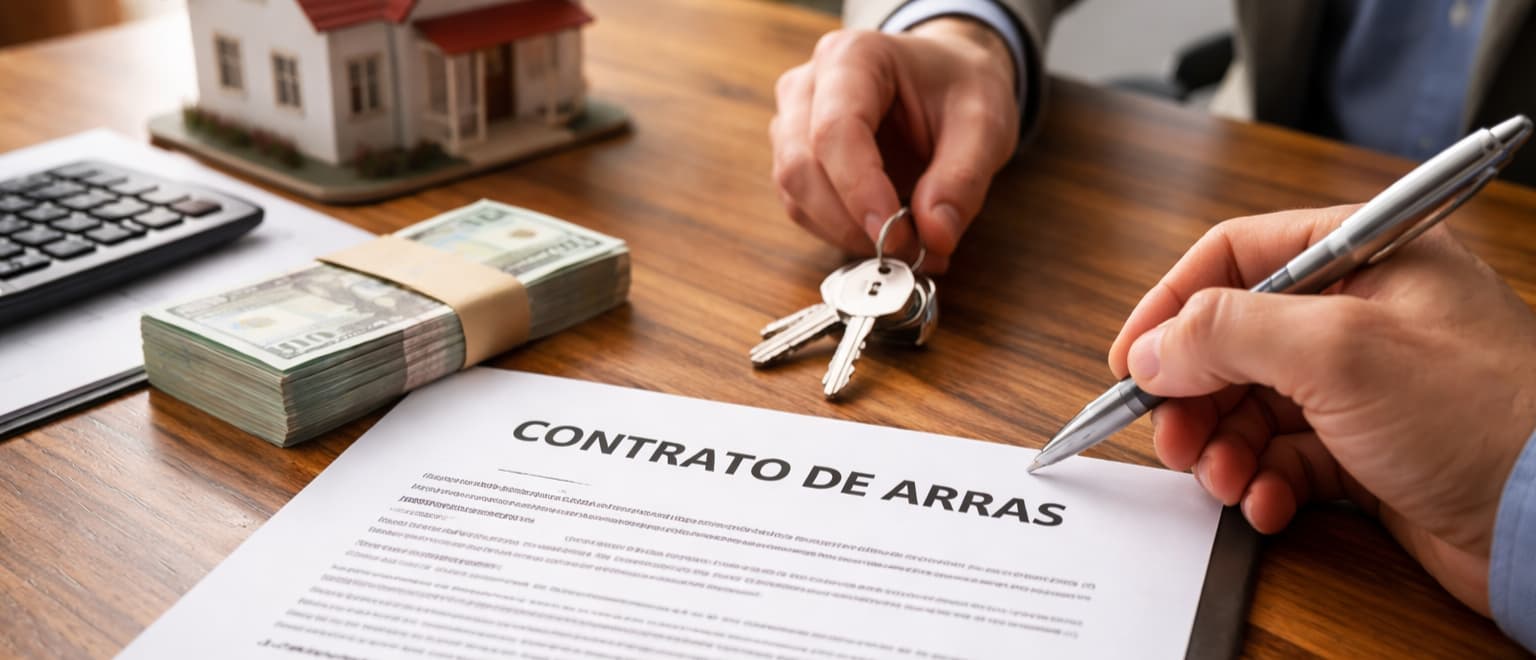
Signing an earnest money contract is the point at which buyer and seller usually see the deal as practically agreed. Even though some steps still remain, it marks the real beginning of the purchase process.
The price is agreed, a deposit is paid and both parties commit to moving forward with the sale.
But sometimes the buyer changes their mind. It may be because of a change of plans, financing problems or simply because another property appears that seems more attractive.
That is where one of the most common questions appears: what happens if the buyer backs out after signing an earnest money contract?
The answer depends mainly on the type of earnest money arrangement that was signed and on how the contract is drafted. Not all of them work in the same way and they do not all have the same consequences.
If you still have doubts, do not worry. At Firma Vivienda we want to explain everything you need to know if this happens in your case.
That is why it is so important to understand this document properly before signing it. If you want to see how it should be structured, you can review this earnest money contract template between private parties, where we explain the most important clauses and the most common mistakes.
The earnest money contract is not just a simple paper
Many people think the earnest money contract is something provisional or not especially important because the final property sale has not yet been signed before the notary.
But that is not how it works, and this is where one of the biggest mistakes usually begins: not giving the document the importance it deserves.
The earnest money contract has legal value and creates obligations for both parties from the very moment it is signed.
That is why, when the buyer decides not to continue, the consequences can be significant.
And that is where the type of earnest money arrangement becomes essential to understanding those consequences.
If it is penalty earnest money
In Spain, the most common option in these contracts is penalty earnest money.
This type allows either party to withdraw from the transaction, but only by assuming a financial penalty.
For the buyer, if they decide to back out, they lose the amount paid as the deposit.
In other words, if the buyer paid 10,000 euros as earnest money and ultimately does not buy the property, the seller can keep that amount.
That is what usually happens if the buyer backs out after signing an earnest money contract when the contract is based on penalty earnest money.
What happens if the contract does not specify the type
This is where many misunderstandings begin. Not all earnest money contracts allow a party to walk away freely. There are also confirmatory earnest money arrangements and penal clauses.
In those cases, the consequences are different from the ones explained above.
For example, the seller may be able to claim specific performance through the courts or even seek additional compensation for losses.
The problem is that many people sign templates downloaded from the internet without really understanding which type of earnest money they are using. That is when the surprises come later.
Why reviewing the contract carefully matters
One of the biggest mistakes is signing earnest money quickly just to avoid losing the property.
And yes, that pressure exists. But that is precisely why it is worth stopping and reviewing the document carefully before signing.
Some clauses are especially important:
- the type of earnest money
- the deadlines
- financing
- penalties
- suspensive conditions
All of that can completely change the consequences if either party later decides not to continue.
For example, if the buyer needs a mortgage, it is essential to include the financing clause properly and to set reasonable deadlines.
If you are not sure how this works, you can read this guide on how to make an earnest money contract between private parties, where we explain the process step by step.
What happens if the buyer backs out because the bank does not approve the mortgage
This is one of the most common situations.
The buyer signs the earnest money contract expecting to obtain financing and later the bank refuses the mortgage.
Here everything depends on whether the contract includes a financing suspensive condition.
If that clause is properly drafted, the buyer may recover the deposit and cancel the transaction without a penalty.
But if that clause does not exist, the usual outcome is that the buyer loses the money already paid.
That is why it is so important to think about this scenario before signing. It is also advisable to review your financing options with your bank before you even start seriously looking for a property.
If you want to go deeper into this situation, you can also read what happens if the bank does not approve the mortgage after signing an earnest money contract.
How much money can the buyer lose
The amount depends on how much was paid as the deposit.
The most common practice is for the earnest money to represent between 5% and 10% of the property price, although there is no mandatory fixed figure.
If you want to understand this better, here we explain how much money is paid in an earnest money contract and which factors influence that amount.
Because yes, when the buyer backs out, that money may be lost.
And in some transactions we are talking about substantial amounts.
Can the seller claim anything else?
With penalty earnest money, usually not.
The penalty is already defined: the buyer loses the deposit and that is generally where the conflict ends.
But with other types of earnest money arrangements, or in certain situations, the seller may try to claim additional losses.
For example, if they rejected other offers or if the breach caused them significant financial harm.
That is why it is once again essential to understand which type of contract is actually being signed.
What to do if you want to cancel the transaction
If you are the buyer and you are thinking of backing out, the first step is to review the contract carefully.
It is not wise to make quick decisions or let time pass without speaking to the other party.
In some cases there may still be room to negotiate:
- extend deadlines
- modify conditions
- seek alternative financing
And in other cases, simply accepting the loss of the deposit may be the least harmful option.
Every transaction is different.
How to avoid this problem from the start
The best way to avoid conflict is to structure the transaction properly from the beginning.
And that means:
- reviewing your financial situation before signing
- not rushing into the earnest money contract
- using a contract adapted to the actual transaction
- including the important clauses correctly
Today there are tools that make this whole process much easier.
For example, you can manage the entire private property sale from a single platform and automatically generate contracts adapted to your situation.
You can also see exactly how the process works with Firma Vivienda before you start.
And that helps avoid many common mistakes.
So... can the buyer back out?
Yes, they can.
But depending on the contract, the financial consequences may be significant.
That is why, before signing earnest money, the important thing is not only to reserve the property. The important thing is to understand exactly what you are signing and what may happen if something changes later.
Because when the question appears of what happens if the buyer backs out after signing an earnest money contract, the problem has often already started.
Draft your earnest money contract with more confidence
If you want to avoid mistakes and make sure the contract reflects all the conditions of the transaction correctly, you can rely on our platform to generate the documentation step by step.
That way you can manage the whole property sale with more peace of mind and avoid many of the problems that appear when generic templates are used.
And if you have specific questions about your situation, you can always contact Firma Vivienda and get guidance before signing.