
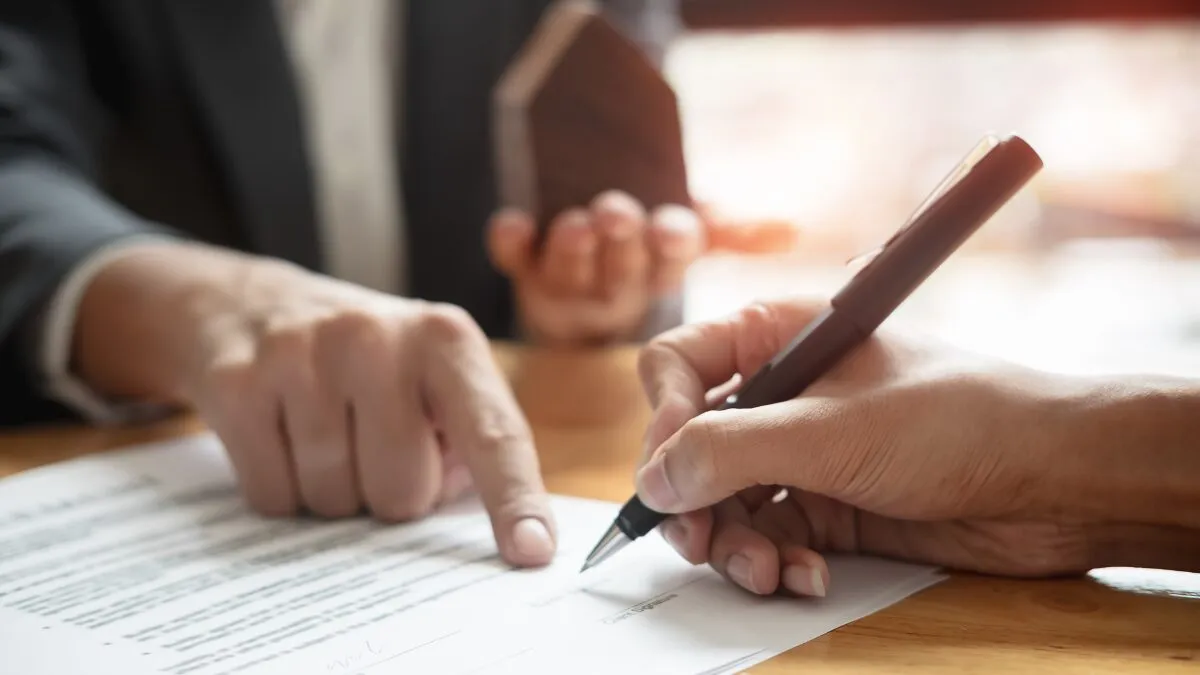
Buying or selling a home between private parties is not just about agreeing on a price. There are many details to keep in mind so that a safe transaction does not turn into a legal problem that causes major headaches.
One of the key moments comes when both parties decide to formalise that agreement. That is where knowing how to make an earnest money contract between private parties correctly becomes essential.
This document is the step before the final property sale and sets out the conditions both parties accept before going to the notary.
The problem is that many people do not know where to start. Or worse, they use generic templates without checking whether they really fit their case.
That is why, in this article, we are going to explain step by step how to do it properly, avoiding common mistakes and making sure your contract is clear, complete and safe.
If you want to avoid complications from the start, we recommend creating your own online earnest money contract directly through Firmavivienda. With us, you can generate a document tailored to your case in just a few minutes.
Steps to formalise an earnest money contract between private parties
Here is the step-by-step process for preparing this contract correctly between seller and buyer.
If you want to start from a reliable base before you begin, you can check this example of an earnest money contract template between private parties, where we explain how it should be structured properly.
Step 1: Check the registry status
Before drafting any document, there is a previous step that many people overlook: checking the legal status of the property.
The simplest way to do this is by requesting a land registry extract. This document lets you know who the real owner of the property is and whether there are any encumbrances, such as mortgages, liens or limitations.
Many people skip this step and then unpleasant surprises appear.
The registry status of the property allows you to know:
- Who the real owner is
- Whether there are encumbrances, such as a mortgage or liens
- Whether there are limitations affecting the property
This document is key because it:
- Prevents fraud
- Confirms ownership
- Helps detect issues before signing
If this information is not checked, you could sign a contract with someone who is not the real owner or for a property that has hidden encumbrances.
That is why this step is essential before moving forward.
Step 2: Agree on the type of earnest money
Once the property status has been verified, the next step is deciding what type of earnest money arrangement you are going to sign. Understanding this point is essential when looking at how to make an earnest money contract correctly.
Not all earnest money contracts work in the same way.
There are three main types:
Penalty deposits
These are the most common.
They allow either party to back out:
- The buyer loses the deposit
- The seller returns double the amount
Confirmatory deposits
They work as an advance on the purchase price.
They do not allow either party to withdraw freely.
Penal deposits
They include an agreed penalty in the event of breach.
Choosing the right type of earnest money is key because it defines the consequences if something goes wrong.
In most cases, penalty deposits are the most commonly used option because they offer flexibility.
Step 3: Draft the key clauses
This is the core of the contract. Knowing how to make an earnest money contract means including all the necessary clauses so that the document is complete and leaves no room for interpretation.
The contract must correctly identify buyer and seller, including their personal details, and describe the property accurately. It is also essential to specify the total sale price, the amount delivered as a deposit and the way the remainder of the price will be paid.
These are the most important clauses:
Identification of the parties
It should include:
- Full name
- DNI or NIE
- Address
If there are several owners, all of them must appear.
Identification of the property
It is important to describe the property clearly:
- Full address
- Cadastral reference
- Registry details
- Annexes, such as garage or storage room
This avoids confusion.
Sale price
It should specify:
- Total price
- Amount delivered as earnest money
- Payment method
For example:
The total price of the property is set at a specific amount and a deposit is delivered as earnest money.
Deadline to sign before the notary
This point is fundamental.
A clear deadline must be stated.
Avoid ambiguous phrases such as "within a reasonable period of time".
Financing condition
If the buyer needs a mortgage, this point is key.
A clause can be included stating that the contract becomes void if financing is not granted.
If you are at this stage and want to make sure nothing is overlooked, we recommend managing the entire private property sale process with us.
Step 4: Set clear penalties
One of the most important aspects when learning how to make an earnest money contract is making the consequences of non-compliance very clear. This protects both buyer and seller and helps avoid future disputes.
In the most common case, penalty deposits establish that if the buyer backs out, they lose the deposit, while if the seller breaches the agreement, they must return double.
This logic is simple, but it must be drafted properly to avoid incorrect interpretations.
That is why it is important to make this point crystal clear.
In the most common case, that is, with penalty deposits:
- If the buyer backs out, they lose the deposit
- If the seller breaches, they return double
This protects both parties and avoids disputes.
The problem comes when this section is not drafted properly.
Some generic templates:
- do not specify the consequences correctly
- mix different types of earnest money
- create ambiguity
And that can lead to legal problems.
That is why this point must be properly defined.
Step 5: Sign and pay the deposit
Once the contract has been drafted, it is time to sign.
Both parties sign the document and the buyer pays the agreed amount as a deposit. This payment is usually made by bank transfer or cheque, and it is important to keep proof of it.
Payment can be made by:
- bank transfer
- cheque
- other agreed methods
It is important that there is evidence of the payment.
This moment marks the formal commitment between buyer and seller.
From that point on, both parties are bound by the contract.
Is it mandatory to formalise it as a public deed?
A very common question is whether the earnest money contract must be signed before a notary. The answer is no. This document is a private agreement and is fully legally valid without having to be formalised as a public deed.
However, that does not mean it is unimportant. In fact, it is one of the most relevant documents in the whole transaction.
What is mandatory is that the final property sale must be formalised through a public deed before a notary.
The earnest money contract is simply the step that comes before that.
When professional support is advisable
Although many people choose to handle it on their own, there are situations where getting help is highly recommended.
For example:
- When there are several owners
- If the property has encumbrances
- When the purchase depends on a mortgage
- If there are long deadlines
- In more complex transactions
In these cases, a poorly drafted contract can create significant problems.
Avoid mistakes when making your earnest money contract between private parties
Knowing how to make an earnest money contract is not difficult, but it does require attention to detail.
This document is the basis of the property sale. It defines conditions, deadlines and consequences.
And a small mistake can have a major impact.
That is why, beyond simply using a template, what really matters is understanding what you are signing.
Generate your contract safely
If you want to avoid legal mistakes by generating a contract adapted to your case, you can easily do it from our platform.
The system guides you step by step to create your contract with all the necessary clauses, adapted to your situation and prepared for a private property sale.
This way you can move forward safely, avoid problems and reach the notary signing with peace of mind.
And if you have doubts about your specific case, you can contact the team directly through the contact page and receive personalised help.